The short answer: hospitality and care continue across death
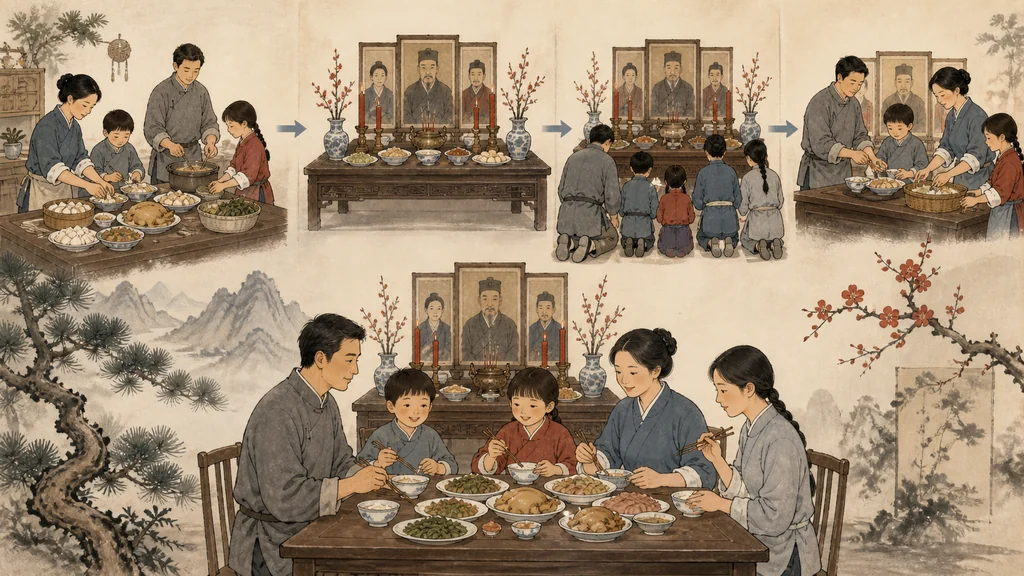
Food and drink form one of the most familiar languages of relationship. People use them to nourish a family, welcome a guest, celebrate a festival and say, without abstraction, “I remember you.” Ancestral offerings extend that language beyond death. One family may say that ancestors receive fragrance, essence or a spiritual portion. Another may describe the table as remembrance and gratitude. The same participants can hold both understandings together.
The food does not have to diminish visibly for the rite to have meaning. The “Summary Account of Sacrifices” in the Book of Rites says sacrifice does not arrive as something imposed from outside; it is born in the heart and expressed by presenting material things through ritual. Meaning resides in the entire sequence of choosing, cooking, arranging, addressing, waiting and gathering—not in calories disappearing from a plate.
The empty bronzes in museums once held food and wine
Shang and Zhou ritual bronzes now look like self-contained sculptures behind glass. They were also containers. A ding could cook or present meat, a gui held grain, and vessels such as zun, you and jue were associated with storing, pouring or drinking wine. Exact functions vary by shape and period, so these names should not become a timeless dinner-service chart.
The Metropolitan Museum of Art has a late eleventh-century BCE altar set containing wine containers, cups and a water vessel. Differences in inscriptions and style leave the set’s original grouping uncertain, but corrosion traces help reconstruct part of its arrangement. It may represent equipment accumulated in a family shrine before its burial in a tomb. That “may” matters: a museum reconstruction is evidence, not a photograph of the ancient ceremony.
Bronzes also materialised hierarchy. Large-scale casting required concentrated resources, and the permitted combinations of vessels could mark elite rank. Much later, Qing emperors used porcelain ritual vessels modelled on ancient bronzes in state ceremonies. A Bronze Age lineage shrine, a furnished tomb, an imperial sacrifice and a present-day household table are historically connected without being the same unchanged ritual.
Fragrance and libation turn a meal into an offering
The “Meaning of Sacrifices” chapter describes burning fat with aromatic southernwood so that scent rises, while also naming millet, rice, parts of sacrificial animals, wine and fragrant drink. Smell, steam, poured liquid and spoken address move ordinary ingredients into a period set apart for ancestors. Fragrance is especially expressive: it issues from material food and fills a room, but cannot be grasped like a piece of meat.
Waiting contributes to the transformation. A household may arrange cups and chopsticks, light incense or bow, report a festival and recent family news, invite the ancestors to eat first, and remove the dishes only after an interval. Even for someone who does not understand the ancestor as literally present, the sequence leaves an actual place and portion of time for the dead. Remembering becomes a coordinated practice rather than a passing thought.
Wine adds further actions. It can be poured into a cup, offered in repeated rounds or tipped as a libation. Tea or water may take its place according to the person remembered, family custom and the setting. The liquid is not a bribe exchanged for supernatural favours; it extends the etiquette of receiving an honoured relation.
Saying an ancestor has “eaten” can mean several things
Traditional language may say that spirits or ancestors enjoy or accept an offering. The relevant object can be its aroma, subtle essence and the sincerity with which it is presented rather than food chewed by invisible teeth. Another household may say plainly that the ancestors return for the meal while expecting no physical change in the dishes. Someone else may explain only that the fish was a mother’s favourite and gives grandchildren a story about her life.
These accounts need not exclude one another. A person can act in front of the altar according to the ancestor’s presence and later describe the same act as family memory. Pressing a participant to choose between “literal belief” and “mere symbolism” imposes a distinction that the practice may not require.
A better pair of questions is more concrete. What does this family understand the ancestor to receive? What do the living accomplish by making the offering? Answers may include nourishment, fragrance, respect, reciprocity, memory, blessing and the renewal of kinship.
Offerings often return to the community of the living
The Book of Rites describes an ancestral-temple ceremony in which a living person represented the deceased, received cups, and was followed by ministers and participants drinking according to rank and age. This elaborate elite rite is not a template for a modern kitchen. It does show that offering did not simply remove food and drink from human society. Sacrifice also reordered relationships among the living.
Many families now bring dishes back to the dining table after the ancestors have “eaten,” divide them among relatives or take portions home. Ancestors receive first; descendants then share. The meal can thereby bind the absent and present generations into one sequence of hospitality.
Other local practices leave particular items at a grave, burn them, give them away or discard them. Food safety, cemetery rules and the length of an outdoor rite affect what is possible. Eating an offering afterwards does not prove that its earlier presentation was theatre. Nor should one household use its own disposal rule to accuse another of waste.
A changing menu answers “Who are we remembering?”
Offerings may include rice, cooked dishes, tea, wine, fruit, cakes and the first produce of a season. Families also select what the deceased especially enjoyed. A particular tea brand, homemade dumplings or even biscuits discovered after migration to Britain may evoke an individual more vividly than a supposedly standard ancestral menu.
Dietary commitments, Buddhist vegetarian practice, memories of illness, budget and available ingredients all alter the table. A transnational family might substitute British apples for fruit from a home region, use a non-alcoholic drink, or omit flame and incense in a building with strict fire rules. Such adjustment is not automatically declining respect. Historical offerings always changed with season, production, status and ritual system.
This personal element also explains why an offering can look surprisingly ordinary. Its value may lie precisely in repeating the small food preference through which a family once cared for the person in life.
What to do in a British home or museum
When visiting a household rite, ask whether you can help, where to stand, whether and when to bow, and when offerings may be removed. Do not move cups or chopsticks, sample a dish, extinguish incense or treat the table as a buffet without permission. If religious, dietary or emotional reasons prevent participation, say so politely; quiet presence, flowers or shared recollection may offer another form of respect.
In a museum, imagine perishable grain, meat and wine inside an empty ding, gui or wine vessel. Bronze is the durable remainder of an event whose smells, words, movements and food are gone. Check whether the label describes a tomb, lineage temple or state sacrifice before generalising to household practice.
Electric candles, water and sealed food may replace flame, alcohol or open dishes under British fire and venue rules. Ritual has always involved adaptation. Safety-conscious change should not be mocked as inauthentic.
What to remember
Food and wine make remembrance something that can be prepared, smelled, placed and shared. Families differ over how ancestors receive them. What they share is the use of ordinary hospitality and care to preserve a place for the dead within a continuing relationship. To understand the offering, watch the whole sequence rather than the level of food on the plate.