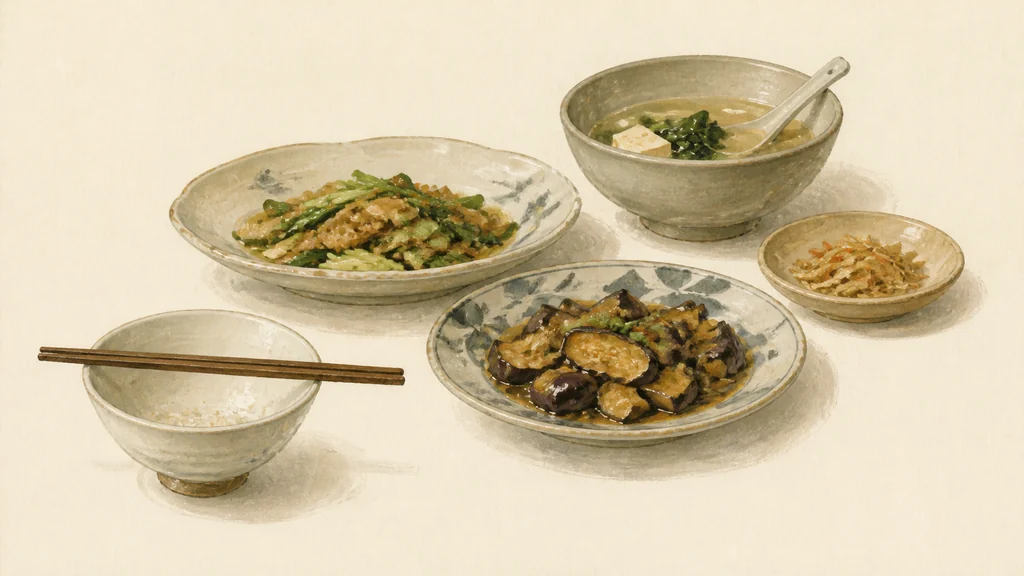
The meal is nearly over and you are full, but your Chinese host turns another dish towards you: “Have some more.” You say no thank you, and food still arrives. A British guest may feel their answer has been ignored, while the host may suspect that the guest is being restrained and does not want to inconvenience the family.
Understanding this interaction does not require you to keep eating. In many households, food is a direct language of care and a second offer can express warmth. Good hospitality must still respect a clear refusal. The useful response does three things together: praises the food, states that you are full, and stops further serving.
Why might one refusal bring another offer?
A 2020 study in Contrastive Pragmatics compared end-of-dinner offering among Xi’an residents in 1995 and 2019 and Southern California residents in 2019. The 2019 Xi’an group offered more food much less often than the 1995 group, but still more often than the Southern California group. The authors connect the Xi’an pattern with warmth and hospitality as important notions of politeness.
In an interview, one host explained that a guest’s first refusal sounded hesitant, so she understood that he could still eat. She believed an assertive refusal would not have prompted a second attempt. This matters more than internet claims that guests must refuse exactly three times. There is no reliable fixed count. The clarity of an answer helps shape what happens next.
The study concerns particular populations, not all of China. Region, age, family and historical change matter. Some hosts stop after one question. Some older relatives ask repeatedly, and others place food directly in a guest’s bowl. You can recognise care without surrendering the right to have a clear answer accepted.
What is the clearest phrase?
A natural structure is praise plus physical state plus closure:
“很好吃,谢谢,我已经吃饱了。”
Hěn hǎochī, xièxie, wǒ yǐjīng chībǎo le.
It means, “It’s delicious, thank you; I’m already full.” Yǐjīng marks the state as reached, while chībǎo le is more specific than a vague “no need”. If the offer continues, repeat warmly: “真的够了,我自己来就好” (Zhēn de gòu le, wǒ zìjǐ lái jiù hǎo)—“That really is enough; I’ll help myself.”
Avoid making every refusal ambiguous. “Maybe not”, “I’m okay” or smiling without words can be interpreted as modesty. Clarity is not rudeness. A calm voice, eye contact, thanks and a definite statement are more effective than increasingly frustrated hints.
English also works: “It was delicious, thank you. I’m genuinely full, so please don’t give me any more.” A friend or partner can translate, but should not overrule your description of your body.
How can body language help?
Stop taking food, rest your chopsticks safely on a holder or by your bowl, and place a hand lightly above the bowl when someone moves to serve you. Hong Kong Education Bureau-hosted school material similarly illustrates covering or guarding the bowl while thanking someone who offers more.
The movement should prevent another serving, not knock away chopsticks. If food has already entered your bowl, you do not have to force it down. National Academies guidance for visitors to China also suggests cheerfully declining food placed by serving chopsticks and insisting that you can help yourself.
Do not rely on an empty bowl alone. A host may read it as available space. Words—“I ate very well and I am full”—are more reliable than asking the tableware to communicate.
Must you deliberately leave food?
Online etiquette lists often claim that a guest must leave food or the host will think there was not enough. That is not a useful national rule and can encourage waste. Modern anti-waste campaigns, takeaway practices and divided serving are changing restaurant behaviour. Do not force yourself to finish what you cannot eat, but do not take excess food merely to leave a symbolic remainder.
With communal dishes, simply stop serving yourself. Take small portions into your personal bowl and return for more only if wanted. If substantial food remains, the group may ask for it to be packed; follow the host and restaurant. Fullness is best shown through speech and stopping, not staged waste.
Praising a meal does not require finishing every dish. Mention a particular flavour, aroma or technique you enjoyed. Specific appreciation often tells the cook more than another uncomfortable mouthful.
What if the host puts food in your bowl?
Serving a guest can express care in some families, especially from an elder to a younger person or a host to a visitor. Hygiene expectations and personal boundaries are changing the practice. Some households use serving chopsticks; others let everyone take their own food.
Say, “Thank you, I’ll help myself.” If already full, add that you genuinely cannot eat more. Accepting ten servings in silence can make the host believe that you remain willing. Clear consistency is kinder than resentment.
Children should also be allowed to communicate fullness, allergies and texture aversions. Adults can help them use words rather than tying obedience to forced eating. Caring for someone includes believing their bodily signals.
Allergies, health and religion require direct language
A severe allergy is not “I don’t feel like this today”. State it before ordering and serving: “我对花生严重过敏,不能吃” (Wǒ duì huāshēng yánzhòng guòmǐn, bù néng chī)—“I have a severe peanut allergy and cannot eat it.” Explain cross-contact. Shared plates and serving chopsticks do not guarantee isolation from an allergen.
Diabetes, swallowing difficulty, digestive illness, pregnancy restrictions, vegetarian or halal practice, and avoiding pork also deserve direct statements. A well-intentioned “one bite won’t hurt” does not change medical or religious requirements. Repeat: “Thank you, but I cannot eat it; I’m not being polite.”
Alcohol has the same boundary. “我不喝酒,请给我茶或水” (Wǒ bù hējiǔ, qǐng gěi wǒ chá huò shuǐ) means, “I don’t drink; please give me tea or water.” You need not claim a low tolerance or accept one small glass. A 2025 contrastive-pragmatics study examines Chinese and English food and alcohol offering together, but physical risk still requires a firm stopping point.
What if the host continues?
Remain warm, then become more explicit: “Thank you, I truly cannot eat any more. Please don’t put more in my bowl.” Move the bowl nearer to yourself or ask a bilingual companion to clarify. Do not continue smiling and accepting while expecting the host to infer the opposite; mixed signals prolong the exchange.
If someone treats an allergy, illness or explicit refusal as mere politeness to overcome, the problem is no longer a harmless cultural misunderstanding. You may step away from the table, request separate utensils or stop the drinking interaction. Respecting culture never requires abandoning bodily autonomy.
For a host, generosity means providing choice, asking about restrictions and stopping when a guest clearly says they are full. For a guest, a good refusal need not dismiss the meal. It can communicate that the food was appreciated, the care was received, and the body now needs no more.