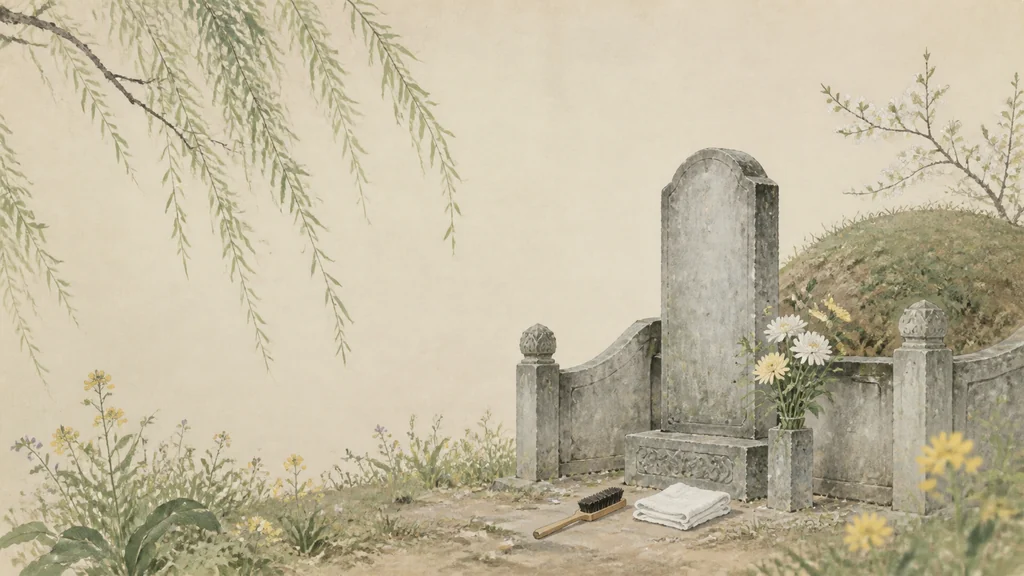
English often calls Qingming “Tomb-Sweeping Day”. The translation captures its most visible activity but narrows the occasion. Qingming is first one of the Twenty-Four Solar Terms, marking a point in spring according to the Sun. It also became a major time for families to tend graves and remember the dead, while retaining spring outings and kite flying.
It is therefore not simply another funeral, nor is sadness its only permissible mood. A family may clean a grave, place flowers and tell stories about grandparents, then eat together or walk outdoors. Remembrance of death and attention to new spring growth coexist.
Why does Qingming have a fairly stable date?
Lunar New Year and Mid-Autumn Festival move widely through the Gregorian calendar because their dates are determined by months in the Chinese calendar. Qingming is a solar term and normally falls around 4 or 5 April. It is not simply a fixed day in a lunar month.
UNESCO’s record of the Twenty-Four Solar Terms explains that the Sun’s annual motion was divided into twenty-four segments, each given a name. The system developed from observation of seasons, astronomy and natural phenomena in the Yellow River region and was progressively applied across China. The associated knowledge and practices entered UNESCO’s Representative List in 2016.
The word qingming evokes clarity and brightness in the spring landscape. The solar term originally assisted agricultural and seasonal life, while grave visiting became closely joined to it. Public holidays, school timetables, transport and cemetery management now further concentrate family activity around the date.
What does “sweeping a tomb” involve?
It does not mean cleaning unknown graves. A family or lineage tends a grave, columbarium niche or memorial place connected with its dead. Activities may include removing weeds and dirt, arranging the stone, placing flowers or food, offering incense, bowing, standing quietly and explaining to younger relatives who is remembered there.
Hong Kong Education Bureau material describes families preparing together, then cleaning and bringing flowers, incense, paper items and food offerings. That is a documented Hong Kong example, not a compulsory checklist for every Chinese household. Buddhist, Daoist, Christian, folk-religious and non-religious families may use different forms, as do different regions and cemetery systems.
Offerings do not have one literal meaning. For some, they extend care to ancestors; for others, a deceased person’s favourite food brings memory into the present. Reporting family news or retelling an old story can also reaffirm the relationship.
Why do grave visits and spring outings coexist?
The modern festival developed through historical layering. Scholars discuss interactions among the Cold Food Festival, Shangsi and Qingming: restrictions on fire, spring ancestor rites, waterside purification and outdoor recreation moved closer and were reorganised over time. No single founder or story accounts for everything.
Taqing means going out into the green spring landscape. Kite flying, willow, flowers and family excursions appear in historical records and modern cultural programmes. A Frontiers in Psychology study of a televised Qingming ritual programme surveys tomb rites, excursions, kites and literary gatherings, showing that remembrance and spring enjoyment are not opposites.
Graves are also often on hills or beyond the city, so visiting naturally involves walking through a seasonal landscape. Eating or taking a walk after the family rite need not disrespect the dead. Qingming places “remember where we came from” and “continue living” in the same spring frame.
Must families burn paper and incense?
No. Burning incense, paper money or paper objects is important to some households, while others use flowers, cleaning, prayer or silence. Cemeteries, columbaria and countries impose different fire rules; many overseas sites prohibit burning entirely.
Fire danger is concrete. Before Qingming in 2026, Hong Kong’s Agriculture, Fisheries and Conservation Department warned that most countryside hill fires result from negligence. It told visitors not to burn weeds, not to leave offerings unattended and to extinguish all material before leaving. The Food and Environmental Hygiene Department has encouraged flowers instead of burning and asks families to remove rubbish and water-holding containers.
Do not bring fire merely because an online guide says Qingming requires paper burning. Ask the family and site and obey local law. If burning is permitted, use designated equipment under the direction of someone who knows the rules. Removing plastic flowers, food boxes, bottles and residue is part of caring for the grave and landscape.
Must the atmosphere be solemn and sad?
Families differ. A recent bereavement may make a visit painful; tending a grave several generations old may feel like an annual gathering. Some people remain quiet, others talk while cleaning, and some teach children names, places of origin and family history.
Do not demand a display of grief, but do not treat a cemetery as a tourist set. Ask before photographing a rite, offerings or relatives. Names, dates and relationships on a grave remain private information even when visible outdoors.
“Ancestor remembrance” also does not prove that every Chinese person worships ancestors as deities. For many it means respect and memory; for others it includes religious offering. Use the family’s own description.
What if the family cannot return home?
People living in Britain, working elsewhere, unwell or far from a grave may be unable to visit on the day. Families can go before or after Qingming; Hong Kong cemetery management has advised staggered visiting to reduce crowds. The date matters, but it is not the only acceptable moment.
At home, people may display a photograph, prepare a remembered food, tell stories, organise family records, call relatives or donate to a relevant cause. Hong Kong’s government provides an internet memorial service, showing that digital remembrance has entered official public options.
Cremation, sea burial, green burial and families without a fixed headstone may use a niche, garden of remembrance or another agreed place. The point is not to reproduce literal sweeping but to give memory a shared time and practice.
What should a first-time guest know?
Ask who is being remembered, how to refer to them, what to bring and whether photographs are permitted. Wear clothes and shoes suitable for weather, long walking and hills. Crowds, wet steps and uneven paths require patience with older relatives and children. Do not step over or sit on graves, move another family’s offerings or assume that outdoor space is public performance space.
Follow the family at the site. You can clear leaves, pass flowers or carry rubbish when invited without trying to lead the rite. If you cannot participate in burning or a religious action, explain gently beforehand and stand quietly. Respect does not require pretending to hold a belief.
Qingming joins three forms of care: a solar point in spring, attention to a physical grave or memorial place, and a family’s continuing memory of the dead. Flowers, cleaning, stories, food and online pages are different tools. What matters is knowing whom the family remembers and ensuring that remembrance does not endanger the landscape or the people present.
Sources and further reading
- UNESCO: The Twenty-Four Solar Terms
- Hong Kong Education Bureau: Ching Ming Festival
- Hong Kong AFCD: Ching Ming hill-fire prevention
- Hong Kong FEHD: Environmental and green remembrance advice
- Frontiers in Psychology: Qingming cultural rituals
- University of Tokyo: The Tomb Sweeping Festival and Funeral Culture