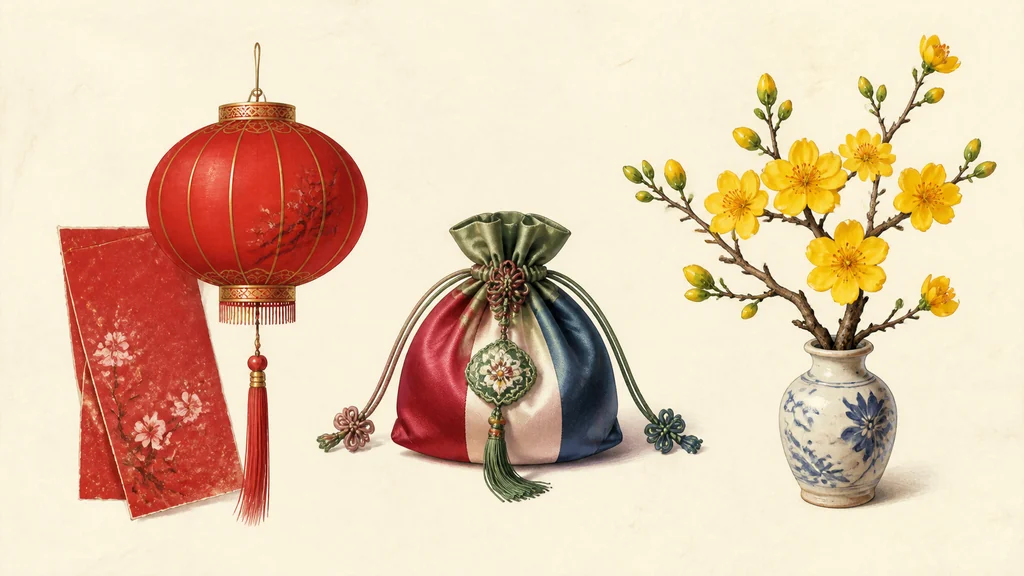
If you are talking specifically about the festival celebrated in China or by a Chinese community, **Chinese New Year** is accurate. **Spring Festival** is another established English name. If a British school, museum or public event genuinely includes Chinese, Korean, Vietnamese and other new-year traditions, **Lunar New Year** is a useful umbrella term.
The two expressions are not simply an old name and its replacement. They describe different scopes. The practical question is not which phrase is universally correct, but whose new year you mean.
What Chinese New Year names
In Chinese, the festival is normally called Chūnjié, or Spring Festival. New Year’s Day is the first day of the first month in the traditional Chinese calendar, although family preparations begin earlier and celebrations extend beyond a single date. Reunion, visits, good wishes, seasonal food and community events can all form part of the festival. Particular customs vary by region, generation and household.
In 2024 UNESCO inscribed “Spring festival, social practices of the Chinese people in celebration of traditional new year” on its Representative List of the Intangible Cultural Heritage of Humanity. The careful wording identifies the people and practices concerned. It does not present every festival held near the same date as one uniform tradition.
That distinction matters in Britain. A London Chinatown programme organised by Chinese community groups and centred on Chinese lion dances, red envelopes, couplets and regional food can reasonably call itself a Chinese New Year celebration. An article devoted to Chinese practices does not become more respectful by removing the word “Chinese”. Naming the cultural subject precisely is itself a form of respect.
What Lunar New Year adds
China has Spring Festival, Korea has Seollal, and Vietnam has Tết. These festivals often begin on the same or a nearby date. They may share broad themes such as family reunion, remembrance and renewal, but their foods, rituals, clothing, histories and family expectations are not interchangeable. Seollal and Tết are not local versions of Chinese New Year.
For that reason, Lunar New Year works well as the heading for a programme that really includes several communities. Museums and international institutions use it in this way. The umbrella provides a convenient point of entry; it should not erase the names underneath it.
A change of heading does not automatically make an event multicultural. If a poster says “Lunar New Year” but every activity concerns the Chinese zodiac, red packets and dragon dances, the content remains specifically Chinese. A better programme can retain the broad heading while clearly identifying which display concerns Chinese New Year, Seollal or Tết. The label and the evidence should describe the same scope.
Why “lunar” is convenient rather than exact
The phrase can sound as though the relevant calendars are based only on the Moon. The traditional Chinese calendar, however, coordinates lunar months with the solar year. The Hong Kong Observatory describes it as an integrated lunar-solar, or lunisolar, calendar.
Months are related to the cycle of the Moon and normally contain twenty-nine or thirty days. The calendar must also remain aligned with the seasons created by the Earth’s journey around the Sun, so it uses mechanisms including leap months. The twenty-four solar terms likewise mark positions in the solar year. This is why the date moves within the Gregorian calendar without the traditional calendar being purely lunar.
“Lunar New Year” is nevertheless established and readily understood English. There is little value in declaring ordinary speakers wrong because “lunisolar new year” would be technically narrower. The scientific distinction becomes useful when explaining how a calendar works. In that context, say explicitly that several lunisolar calendar traditions are involved and that they do not all have an identical history or calculation.
Four situations British readers meet
A Chinatown or Chinese community event
Use **Chinese New Year** when the organisers, audience and programme are specifically Chinese. **Spring Festival** is equally valid, although some readers may need the connection explained on first mention: “Spring Festival, often called Chinese New Year in English.” Follow the event organiser’s own public wording when reporting on it.
A multicultural school lesson
Use **Lunar New Year** for a unit that genuinely includes more than one tradition, then name each one. A lesson should not use one Chinese zodiac chart as a substitute for every culture represented. Nor should it assume that every pupil with East or Southeast Asian family connections celebrates the festival.
Workplace and public greetings
If an organisation does not know the backgrounds of everyone receiving a greeting, “Happy Lunar New Year” can be a broad opening. If an employee network, partner or event is explicitly Chinese, “Happy Chinese New Year” is natural. Often the clearest wording names the relationship: “Celebrating Chinese New Year with our Chinese staff network.” Specificity is more useful than a corporate attempt to find a phrase no one could ever question.
A conversation with one person
When you know the term a person or family uses, follow it: Happy Chinese New Year, Happy Seollal or Happy Tết. If you do not know, Happy Lunar New Year is a reasonable general greeting, or you can ask, “What do you call the festival in your family?” Do not infer whether someone celebrates, or how they celebrate, from appearance or nationality alone.
Misunderstandings to avoid
Chinese New Year has not become inherently outdated or offensive. It remains the more precise phrase when the subject is the Chinese festival. Conversely, Lunar New Year does not inherently deny China’s history; in a multi-community setting it performs a useful classificatory job.
“Asian New Year” is usually less helpful than either phrase. Not every Asian country marks a new year at this time, and not every person with Asian heritage observes it. A shared or nearby date also does not prove that customs are the same. Time zones, calendar conventions, national histories and family choices create real variation.
Before writing a title or greeting, ask three questions. Is the subject specifically Chinese? Does the programme truly include several traditions? Do the people concerned use a more specific name themselves? If the subject is Chinese, choose Chinese New Year or Spring Festival. If several traditions are represented, choose Lunar New Year and retain their individual names. Accuracy about people and context is a better guide than treating two useful expressions as opposing political teams.